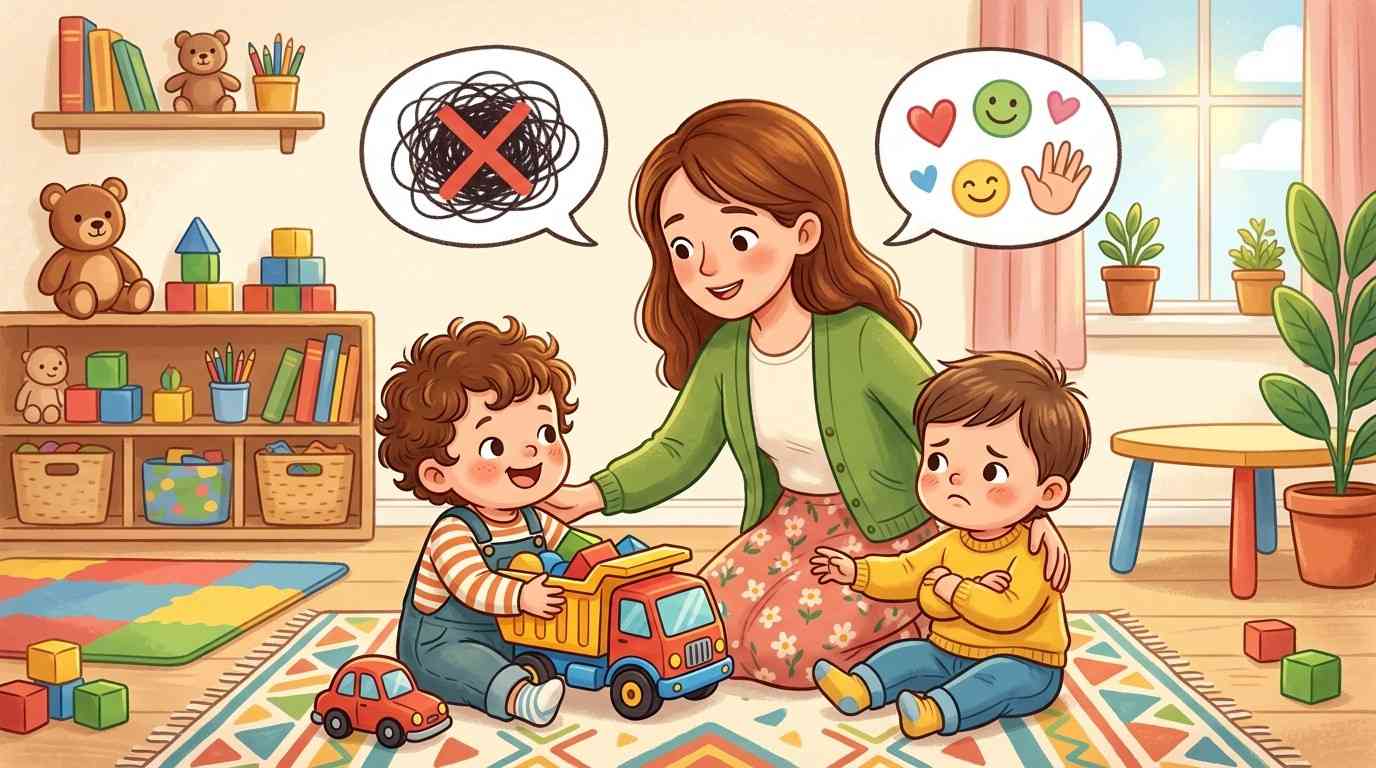
Your toddler stands in the middle of the kitchen, arms crossed, face scrunched into that familiar expression of defiance. “Do you want breakfast?” No. “Should we get dressed?” No. “Want to play with your favorite toy?” No. It’s exhausting, maddening, and if you’re being honest, sometimes a little heartbreaking. You start wondering if something is wrong, if you’ve done something to cause this, or if your sweet child has simply decided that opposition is their new personality.
Here’s what I wish someone had told me earlier: that relentless “no” is actually one of the healthiest things your child can do. It’s not rebellion for rebellion’s sake. It’s your child’s brain doing exactly what it’s supposed to do at this stage of development. When your child says no to everything, they’re not trying to ruin your day. They’re building the psychological architecture they’ll need for the rest of their lives. Understanding what’s really happening behind that defiance transforms how you respond to it, and more importantly, how you feel about it.
The Psychology Behind the Power of No
The word “no” holds extraordinary power for young children. It’s often one of the first words they truly understand, partly because they hear it constantly from adults. When children discover they can use this same word to affect their environment, it’s genuinely thrilling for them. They’ve found a tool that works.
Developmental Milestones and Autonomy
Between 18 months and three years, children undergo a massive cognitive shift. They begin recognizing themselves as separate individuals from their parents. This realization is both exciting and terrifying for them. The “no” phase typically peaks around age two because this is precisely when children are grappling with questions of selfhood.
Psychologists call this the individuation process. Your child is essentially asking, “Where do I end and where does everyone else begin?” Saying no is their way of testing those boundaries, of confirming that they exist as their own person with their own preferences. A child who never said no would actually be concerning from a developmental standpoint.
The Search for Identity and Boundaries
Think about what it means to have no control over your life. Someone else decides when you eat, sleep, play, and bathe. Someone else chooses your clothes, your activities, and your companions. For adults, this level of external control would feel suffocating. Children experience this same need for autonomy, but they lack the vocabulary and emotional regulation to express it maturely.
When your child refuses to wear the blue shirt, they’re not being irrational. They’re asserting that they have preferences worth considering. When they say no to dinner even though they’re hungry, they’re testing whether their voice matters. These boundary-testing moments are practice runs for the bigger autonomy challenges they’ll face as teenagers and adults.
Decoding the Hidden Messages in Their Refusal
Not every “no” means the same thing. Learning to read what your child is actually communicating can help you respond more effectively and with less frustration on both sides.
Testing Emotional Safety and Consistency
Children need to know that your love isn’t conditional on their compliance. This sounds obvious, but think about how often we inadvertently send the opposite message. We’re warmer when children cooperate. We’re colder when they resist. Children pick up on this immediately.
Some defiance is actually a test of your reliability. Your child is asking, “Will you still be here for me if I’m difficult? Will you still love me if I push back?” They need to know the answer is yes. Children who feel emotionally secure with their caregivers often go through more intense “no” phases because they feel safe enough to test those limits. Ironically, a child who never challenges you might be one who doesn’t feel secure enough to risk your disapproval.
Sensory Overload and Decision Fatigue
Sometimes “no” is simply the only word available when a child is overwhelmed. Young children process enormous amounts of sensory information every day. Their brains are working overtime to categorize sounds, textures, social cues, and new concepts. By late afternoon, many children are running on empty.
Decision fatigue affects children even more than adults. If your child has already made dozens of small choices throughout the day, their capacity for making more decisions is depleted. The reflexive “no” becomes a default response because it requires less cognitive effort than actually evaluating each new question or request. This is why bedtime often triggers the worst defiance: your child is exhausted and has nothing left to give.
Common Triggers for Reflexive Defiance
Certain situations reliably produce more resistance than others. Recognizing these patterns helps you anticipate problems before they escalate.
Power Struggles During Daily Transitions
Transitions are hard for children. Moving from one activity to another requires them to mentally shift gears, often abandoning something enjoyable for something less appealing. The shift from playtime to dinner, from home to car, from bath to bed: these moments consistently produce friction.
Children also lack our adult sense of time. When you say “five more minutes,” that phrase means nothing concrete to a three-year-old. They’re fully absorbed in the present moment, and your request to abandon it feels arbitrary and unfair. The “no” that follows isn’t defiance so much as protest against an incomprehensible demand.
Watch for patterns in your own household. Most families have two or three transition points that reliably produce conflict. Morning routines, leaving the playground, and pre-bedtime activities are common culprits. Once you identify your family’s specific triggers, you can develop strategies tailored to those moments.
Mirroring Adult Communication Patterns
Children learn language by imitation. If “no” is a word they hear frequently from adults, they’ll use it frequently themselves. This isn’t accusatory: of course we say no to children regularly. It’s a necessary part of keeping them safe and teaching appropriate behavior. But it’s worth noticing how often we frame requests negatively.
“Don’t touch that.” “No running.” “Stop yelling.” “You can’t have that.” Children absorb these patterns and reflect them back. They’re not being deliberately contrary; they’re using language the way they’ve learned to use it. The adults in their lives have demonstrated that “no” is a powerful word that gets results.
Strategic Shifts to Reduce Resistance
You can’t eliminate the “no” phase entirely, nor should you want to. But you can reduce unnecessary friction and make daily life smoother for everyone.
The Power of Limited Choices
Instead of asking yes-or-no questions, offer controlled choices. “Do you want to get dressed?” invites refusal. “Do you want to wear the red shirt or the green shirt?” gives your child agency while keeping the outcome within acceptable bounds.
This works because it respects your child’s need for autonomy while maintaining your role as the decision-maker on bigger issues. They choose between two shirts; you’ve already decided that getting dressed is non-negotiable. The key is making both options genuinely acceptable to you. Don’t offer a choice you’re not willing to honor.
Limit options to two or three. More than that overwhelms young children and often produces the same paralysis as open-ended questions. The goal is giving them enough control to feel respected without burdening them with decisions they’re not equipped to make.
Using Positive Phrasing and Playfulness
Reframe commands as invitations whenever possible. “Let’s race to the car” works better than “Get in the car now.” “Your toys are tired and need to go to sleep in the toy box” engages imagination rather than triggering resistance. This isn’t manipulation; it’s meeting children where they developmentally are.
Playfulness disarms defiance remarkably well. A silly voice, an unexpected game, or a moment of physical connection can shift the entire emotional tone of an interaction. When you’re locked in a power struggle, both you and your child are operating from a defensive posture. Playfulness breaks that pattern and reminds both of you that you’re on the same team.
Warnings and countdowns help with transitions. “In five minutes, we’re going to put away the blocks” gives children time to mentally prepare. Follow up with “Two more minutes” and then “One more minute.” This respects their need to finish what they’re doing while establishing clear expectations.
When Frequent Negativity Requires Professional Insight
Most oppositional behavior in young children is developmentally normal and resolves on its own. However, certain patterns warrant professional evaluation.
If your child’s defiance is accompanied by extreme emotional reactions that last longer than 20-30 minutes, if they seem unable to calm down even with support, or if their behavior is significantly more intense than peers of the same age, it’s worth discussing with your pediatrician. Persistent defiance beyond age four or five, especially when combined with aggression or difficulty functioning in preschool settings, may indicate oppositional defiant disorder or other conditions that benefit from early intervention.
Trust your instincts. You know your child better than anyone. If something feels off beyond typical toddler behavior, seeking professional guidance isn’t overreacting. Early support makes a significant difference in outcomes. Speech delays can also contribute to oppositional behavior, as children who struggle to express themselves verbally may rely more heavily on “no” and physical resistance.
Nurturing a Cooperative Parent-Child Connection
The goal isn’t raising a compliant child who never questions authority. The goal is raising a child who feels heard, respected, and connected enough to cooperate willingly most of the time.
Connection before correction makes a real difference. When you need your child to do something, start with a moment of genuine engagement. Get on their level, make eye contact, and acknowledge what they’re doing before making your request. “I see you’re building a really tall tower. That’s amazing. In two minutes, we need to wash hands for dinner.” This simple shift dramatically reduces resistance because your child feels seen rather than interrupted.
Pick your battles wisely. Not everything needs to be a confrontation. If your child wants to wear mismatched socks, let them. If they want to eat their vegetables before their chicken, who cares? Save your energy and authority for the things that actually matter: safety, health, and basic respect for others.
Remember that this phase ends. The intensity of toddler defiance typically peaks around age two to three and gradually decreases as children develop better language skills and emotional regulation. The child who says no to everything at two and a half is often remarkably cooperative at five. Your job right now is to maintain connection through the difficult moments while teaching appropriate boundaries. Both of you will get through this, and the relationship you’re building now will carry you through the teenage years when the stakes are much higher.