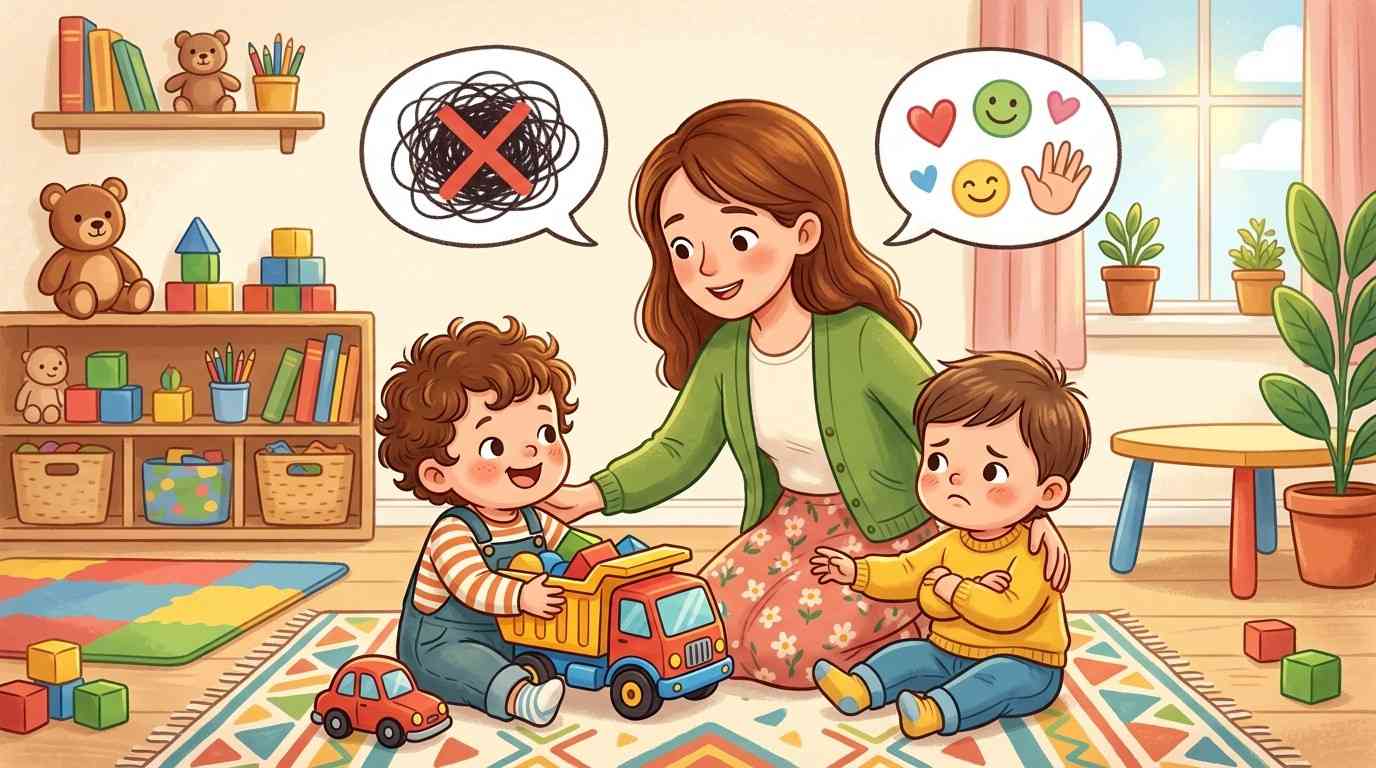
Your three-year-old watches you slam the cabinet door after a frustrating phone call. Your teenager notices how you speak to the waiter who got your order wrong. Your toddler sees whether you reach for your phone the moment you sit down or whether you make eye contact first. These moments feel small, forgettable even, but they form the invisible curriculum of childhood. The hidden lessons kids learn from watching you every day shape their understanding of emotions, relationships, success, and self-worth far more powerfully than any lecture or lesson plan ever could.
I spent years thinking parenting was about the big moments: the heart-to-heart talks, the carefully chosen consequences, the educational activities. But research in developmental psychology keeps pointing to something different. Children absorb their deepest beliefs about how the world works by observing the adults around them, particularly during the mundane moments when we think nobody’s paying attention. The truth is, someone always is.
The Invisible Curriculum of Parental Behavior
Every household runs on unspoken rules. These aren’t the stated expectations posted on the refrigerator but rather the patterns children detect through thousands of small observations. How do the adults here handle disappointment? What happens when someone makes a mistake? Is rest something earned or something shameful? Children piece together answers to these questions not from what we tell them but from what we repeatedly demonstrate.
Why Children Are Wired to Mimic
Human children are born with an extraordinary capacity for imitation. Neuroscientists have identified mirror neurons that fire both when we perform an action and when we observe someone else performing it. This isn’t a design flaw or a phase to outgrow. It’s an evolutionary advantage that allowed our ancestors to rapidly transmit survival skills across generations without formal instruction.
This means your child’s brain is literally practicing your behaviors while watching you. When you take a deep breath before responding to bad news, their neural pathways are rehearsing that same response. When you interrupt your spouse mid-sentence, they’re learning that too. The brain doesn’t filter for lessons you intended to teach versus habits you’d rather they ignore.
The Difference Between What You Say and What You Do
Children are remarkably skilled at detecting hypocrisy, even when they lack the vocabulary to name it. Tell them honesty matters while lying about their age to get a cheaper movie ticket, and they’ll absorb the real lesson: rules are flexible when convenient. Preach kindness while gossiping about neighbors, and they learn that kindness has limits based on social standing.
The disconnect between stated values and demonstrated behavior creates confusion and, eventually, cynicism. Kids who grow up watching adults say one thing and do another often struggle to trust authority figures later in life. They’ve learned early that words are unreliable, so they watch actions instead.
Emotional Regulation and the Stress Response
Perhaps no hidden lesson carries more weight than how you handle difficult emotions. Children don’t arrive knowing how to process frustration, disappointment, or anxiety. They learn emotional regulation by watching the adults around them navigate these states.
How You Handle Minor Inconveniences
The big crises are actually easier to manage. Adrenaline kicks in, we rise to the occasion, and we often model our best selves during genuine emergencies. It’s the minor inconveniences that reveal our true emotional patterns: the spilled coffee, the slow driver, the misplaced keys, the technology that won’t cooperate.
Your child watches what you do when the grocery store is out of the item you needed. Do you sigh dramatically and complain to anyone within earshot? Do you problem-solve out loud? Do you shrug and adapt? These micro-moments accumulate into a template your child will likely follow when facing their own minor frustrations. If you treat small setbacks as catastrophes, they learn that small setbacks are catastrophic.
The Impact of Your Conflict Resolution Style
Every family experiences conflict. The question isn’t whether your children will witness disagreements but what they’ll learn from watching how those disagreements unfold and resolve. Do you shut down and withdraw? Do you escalate until someone surrenders? Do you find ways to repair after ruptures?
Children who watch adults navigate conflict constructively develop crucial skills: they learn that relationships can survive disagreement, that repair is possible after mistakes, and that two people can hold different perspectives without one being wrong. Children who only see conflict avoided learn that disagreement is dangerous. Children who only see conflict escalate learn that relationships are battlegrounds.
The Social Blueprint: How You Treat Others
Your child is building a mental model of how humans should treat each other, and you’re the primary architect. Every interaction they witness becomes data for this model.
Observing Kindness Toward Strangers and Service Staff
How you treat people who can do nothing for you reveals your character, and children notice. The way you speak to cashiers, delivery drivers, and customer service representatives teaches your child about human dignity and social hierarchy. Do you make eye contact with the person bagging your groceries? Do you use please and thank you with the same consistency you demand from your children?
Kids who watch their parents treat service workers with respect learn that all people deserve basic courtesy regardless of their job. Kids who watch their parents dismiss or demean service workers learn that some people matter less than others. This lesson extends into how they’ll eventually treat classmates, coworkers, and strangers throughout their lives.
Setting Boundaries and Saying No
Many parents struggle to model healthy boundaries because they were never taught to set them. But children who never see adults say no to unreasonable requests learn that their own needs should always come second. They may grow into people-pleasers who can’t advocate for themselves or, conversely, into adults who bulldoze others’ boundaries because they never learned to respect them.
When you decline an invitation because you’re exhausted, you’re teaching your child that rest is legitimate. When you tell a pushy salesperson that you’re not interested, you’re demonstrating that politeness doesn’t require compliance. When you end a phone call because it’s family time, you’re showing that priorities can be protected.
Relationship with Self and Personal Growth
The relationship you model with yourself may be the most influential of all. Children learn self-compassion or self-criticism, confidence or insecurity, largely by watching how you treat yourself.
Body Image and Self-Talk Lessons
Your child hears what you say about your body. The casual comments about needing to lose weight, the complaints about aging, the dismissal of compliments: all of it enters their developing understanding of how people should relate to their physical selves. Research consistently shows that parental attitudes about body image predict children’s own body satisfaction, particularly between mothers and daughters.
But it goes beyond explicit comments. Children notice if you avoid photos, if you change clothes multiple times while criticizing your reflection, if you apologize for your appearance. They’re learning whether bodies are sources of shame or simply the vehicles that carry us through life.
The Value of Lifelong Learning and Curiosity
Do your children see you learning new things? Not just consuming content, but genuinely grappling with unfamiliar skills or ideas? When you attempt something difficult and struggle, you’re teaching that learning involves discomfort. When you admit you don’t know something and then seek the answer, you’re modeling intellectual humility.
Children who watch adults read books, ask questions, try new hobbies, and embrace being beginners develop a growth mindset almost automatically. They learn that competence is built, not born, and that not knowing something is a starting point rather than a character flaw.
Work Ethic and the Meaning of Success
Your child is forming beliefs about work, achievement, and what makes a life meaningful. These beliefs will shape their career choices, their relationship with ambition, and their definition of enough.
Attitudes Toward Chores and Daily Responsibilities
The way you approach mundane tasks teaches children whether work is a burden to minimize or simply part of life. Do you complain constantly about household responsibilities? Do you rush through them resentfully? Or do you treat them as neutral necessities, sometimes even finding satisfaction in completion?
Children who watch adults approach chores with chronic resentment learn that adult life is primarily drudgery. Children who see adults tackle responsibilities matter-of-factly, without drama, learn that tasks are just tasks. They can be completed without excessive suffering.
Balancing Ambition with Presence
Your relationship with work teaches your child about priorities. This isn’t about whether you work long hours: many children of hardworking parents grow up secure and well-adjusted. It’s about whether work consistently trumps presence and whether success is pursued at the cost of everything else.
Children notice if you’re physically present but mentally elsewhere, checking emails during dinner or taking calls during their events. They’re learning whether they matter enough to warrant your full attention and whether achievement requires sacrificing connection. The lessons they draw will influence their own eventual balance between career and relationships.
Digital Habits and the Presence of Attention
This generation of children is the first to grow up watching adults constantly divide attention between screens and the physical world. The lessons being absorbed are still unfolding, but early research suggests they’re significant.
Your phone habits teach your child about attention and presence. When you reach for your device during conversations, meals, or quiet moments, you’re demonstrating that the present moment is insufficiently interesting. When you scroll while they’re talking, you’re teaching them that they’re interruptible, that whatever’s on the screen might be more important than what they’re saying.
Children also watch how you respond to notifications. Does every ping demand immediate attention? Do you have boundaries around screen time, or is the phone a constant companion? They’re building their own future relationship with technology based largely on what they observe now.
Turning Observation into Intentional Mentorship
The goal isn’t perfection. Children don’t need parents who never make mistakes, lose their temper, or fall short of their ideals. What they need is parents who are aware that they’re being watched and who use that awareness to become more intentional.
Start by noticing your own patterns. What do you do when you’re stressed? How do you talk about yourself, your body, your work? How do you treat people who frustrate you? You don’t need to change everything at once, but awareness is the first step.
When you do fall short, name it. Saying “I shouldn’t have yelled, and I’m sorry” teaches children that adults make mistakes and take responsibility. This is arguably more valuable than never yelling in the first place. It shows that repair is possible and that accountability matters.
Consider what lessons you want to pass on, then look honestly at whether your daily behavior aligns with those intentions. If you want your children to be kind, examine your own kindness. If you want them to handle stress well, work on your own stress response. The hidden lessons kids learn from watching you every day will shape them regardless. The only question is whether you’ll shape those lessons with intention or leave them to chance.
Your children are always learning. The curriculum is your life.