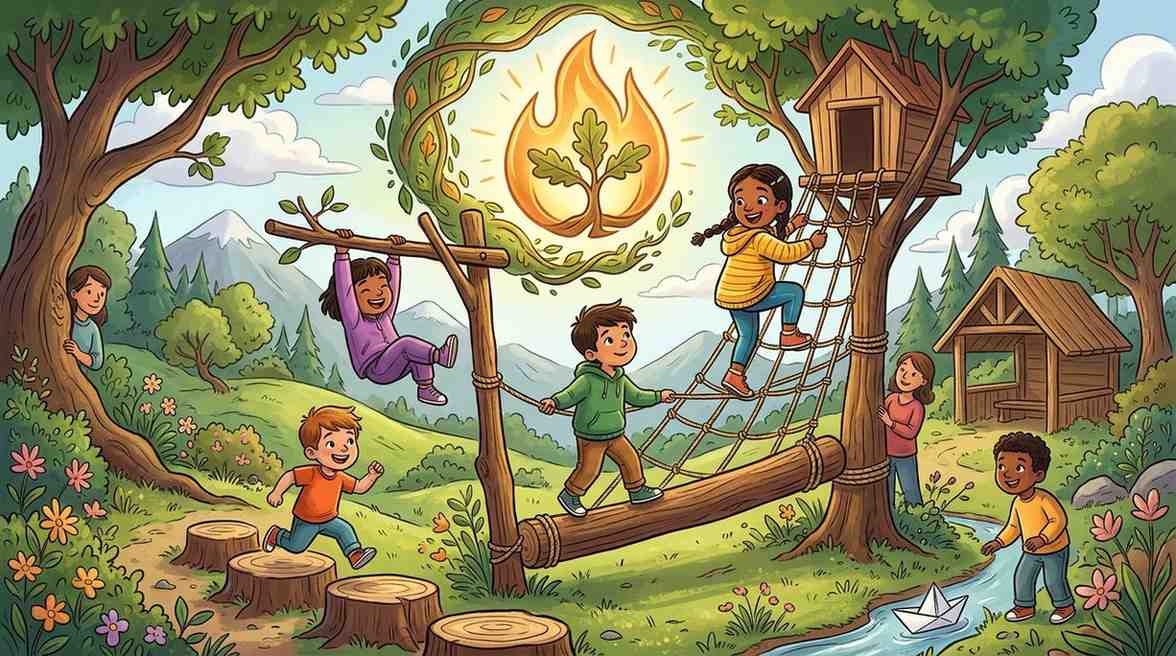
The first warm breeze of spring carries something magical for children: an invitation to explore. After months of indoor play and screen time, kids are ready to burst outside, and that natural energy is exactly what parents and educators can harness for meaningful learning experiences.
I’ve watched my own kids transform from reluctant learners at a desk to enthusiastic scientists in the backyard, all because we moved their classroom outdoors. The shift was remarkable. Suddenly, questions poured out faster than I could answer them. Why do worms come out after rain? What makes that cloud look like a dragon? How does this tiny seed become a sunflower taller than me?
These outdoor activities that spark curiosity in kids aren’t complicated or expensive. They require no special equipment, no teaching degree, and no elaborate planning. What they do require is a willingness to slow down, get a little dirty, and rediscover the world through a child’s eyes. Spring offers the perfect laboratory: everything is waking up, growing, changing, and putting on a show for anyone paying attention.
The seven activities I’m sharing have been tested with kids ranging from preschoolers to middle schoolers. Each one builds genuine scientific thinking, encourages creativity, and creates the kind of memories that stick. Most importantly, they work because they tap into what children naturally want to do: touch things, ask questions, and figure out how the world works.
The Benefits of Outdoor Springtime Learning
Research consistently shows that children who spend regular time learning outdoors demonstrate improved focus, better problem-solving abilities, and reduced stress levels. A 2019 study from the University of British Columbia found that students who participated in outdoor education programs showed a 27% improvement in creative thinking compared to their indoor-only peers. These aren’t small gains: they represent fundamental shifts in how children engage with information and challenges.
Cognitive Development Through Nature
The outdoor environment presents children with constantly changing variables that indoor settings simply cannot replicate. When a child tracks a butterfly’s flight path, they’re practicing spatial reasoning. When they predict which plants will grow tallest based on sunlight exposure, they’re developing hypothesis-testing skills. The natural world doesn’t have an answer key, which forces kids to observe, think, and revise their understanding.
This type of learning builds neural pathways differently than worksheet-based education. Children must integrate multiple types of information simultaneously: visual patterns, physical sensations, cause-and-effect relationships, and temporal changes. The brain thrives on this complexity, particularly during developmental years when cognitive architecture is still forming.
Sensory Engagement in the Spring Environment
Spring overwhelms the senses in the best possible way. The smell of rain on warm soil, the texture of emerging leaves, the sounds of returning birds: these sensory inputs create what educators call “episodic memories,” which are far more durable than facts memorized from a page.
Children learning outdoors in spring engage their vestibular and proprioceptive systems through climbing, balancing, and navigating uneven terrain. This physical engagement actually enhances cognitive function. The brain processes information more effectively when the body is active, which explains why that fidgety kid who can’t sit still at a desk often excels when learning happens on their feet.
Garden Science: From Seed to Sprout
Starting a small garden with children teaches patience, responsibility, and the fundamental biology of life cycles. You don’t need acreage or expertise: a few containers on a balcony work perfectly. The key is choosing fast-growing plants that provide visible results within a child’s attention span. Radishes, lettuce, and beans sprout within days, offering almost instant gratification while still teaching the full growth process.
The Life Cycle of a Flower
Plant marigold or sunflower seeds with your child and document the journey with photos or drawings. Have them measure growth weekly with a ruler, recording data in a simple journal. This introduces scientific documentation while making abstract concepts tangible.
The questions that emerge naturally are remarkable. Kids want to know why roots grow down while stems grow up, how the plant “knows” to face the sun, and what happens inside the seed before anything visible appears. These questions lead to genuine scientific discussions about gravity, phototropism, and germination. You don’t need to have all the answers: looking things up together models lifelong learning.
Soil Exploration and Composting Basics
Hand your child a trowel and let them dig. The underground world fascinates children who discover that soil isn’t just “dirt” but a complex ecosystem. Count the earthworms in a shovelful of garden soil. Examine the different layers and colors. Discuss why some spots feel dry and crumbly while others stay moist and rich.
Starting a simple compost bin demonstrates decomposition in action. Kids can observe how banana peels and apple cores transform over weeks into dark, nutrient-rich material. This concrete demonstration of recycling and ecosystems sticks with children far longer than any textbook explanation of the nitrogen cycle.
Backyard Bio-Blitz and Insect Investigation
A bio-blitz challenges participants to identify as many species as possible in a defined area and time period. Scaled down for kids, this becomes an exciting treasure hunt with scientific value. Grab a magnifying glass, a notebook, and spend an hour cataloging every living thing you can find in your yard or a local park.
Children often discover creatures they never noticed: tiny spiders, various ant species, beetles hiding under logs, and countless plant varieties. Free apps like iNaturalist help identify unknown species and contribute data to real scientific databases. Kids love knowing their observations matter to actual researchers.
Identifying Local Pollinators
Spring brings pollinators out in force, and children can learn to distinguish between different bee species, butterflies, moths, and other flower visitors. Sit quietly near a flowering bush and simply watch. Which insects visit which flowers? Do they have preferences? How long do they stay at each bloom?
This observation builds pattern recognition and introduces ecological relationships. Kids begin understanding that the tomatoes in their garden depend on these tiny visitors. Many children develop genuine concern for pollinator conservation once they’ve spent time watching these creatures work. That emotional connection drives environmental awareness far more effectively than lectures about declining bee populations.
Weather Watching and Cloud Tracking
Spring weather changes rapidly, making it ideal for meteorological observation. Children can learn to read the sky, predict afternoon storms, and understand the water cycle through direct experience rather than diagrams. Start by learning the basic cloud types: cumulus, stratus, and cirrus. Kids love the vocabulary and quickly become skilled at identification.
Keep a simple weather journal tracking daily conditions, temperature, cloud types, and precipitation. After a few weeks, children start noticing patterns. They predict rain before you check the forecast. This builds confidence in their observational abilities and demonstrates that science is about noticing and recording, not just memorizing facts.
Building a DIY Rain Gauge
Constructing a rain gauge takes about ten minutes and provides weeks of engagement. Cut the top off a clear plastic bottle, invert it into the bottom portion as a funnel, and mark measurements on the side with a permanent marker. Place it in an open area and check it after each rain.
Children become surprisingly invested in rainfall totals. They’ll compare weekly amounts, discuss why some storms produce more rain than others, and start connecting weather patterns to plant growth in their garden. This simple tool transforms passive weather awareness into active scientific measurement.
Nature Scavenger Hunts for Critical Thinking
Scavenger hunts channel children’s natural collecting instincts toward educational goals. The key is designing hunts that require thinking, not just finding. Instead of “find a leaf,” try “find something that was alive but isn’t anymore” or “find evidence that an animal was here.” These prompts require interpretation and decision-making.
Create hunts with varying difficulty levels so children experience both quick wins and genuine challenges. Include items that might not exist in your area: when kids can’t find something, they learn that nature varies by location and season. The “failures” teach as much as the successes.
Color Matching with Natural Elements
Give children paint chips from a hardware store and challenge them to find exact color matches in nature. This seemingly simple activity proves surprisingly difficult and incredibly engaging. That “green” chip might take twenty minutes to match because leaves vary so dramatically in shade.
This exercise sharpens visual discrimination and teaches children that categories like “green” or “brown” contain infinite variations. They start seeing colors they never noticed before. Many kids become fascinated by the subtle differences between similar objects and develop more sophisticated observational skills.
Texture and Pattern Recognition in the Wild
Collect items with different textures and have children sort them by feel with their eyes closed. Rough bark, smooth stones, fuzzy leaves, prickly seed pods: the variety in a small outdoor space is remarkable. Discuss why different plants and objects have different textures and what purposes those textures serve.
Pattern recognition activities work beautifully outdoors. Challenge kids to find spirals (snail shells, unfurling ferns), branching patterns (trees, leaf veins, river deltas in mud), and symmetry (butterflies, flowers, leaves). These mathematical concepts appear everywhere in nature, and children who discover them outdoors develop stronger spatial reasoning abilities.
Creative Expression with Found Materials
Art made from natural materials connects creativity with environmental awareness. Children learn to see beauty in ordinary objects and develop resourcefulness. The impermanence of nature art: leaves that dry out, flowers that wilt, and arrangements that blow away also teaches healthy lessons about attachment and change.
Collect fallen materials only, discussing why we don’t pick living plants. This constraint actually enhances creativity as children work with what’s available rather than seeking “perfect” specimens. Some of the most beautiful nature art comes from “imperfect” materials: broken shells, dried seed pods, and weathered sticks.
Sun Prints and Shadow Drawing
Sun printing uses light-sensitive paper to create images from natural objects. Place leaves, flowers, and other flat items on the paper, expose it to sunlight, and watch the image develop. Children find this process almost magical, and it introduces concepts about light, chemical reactions, and photography history.
Shadow drawing requires only paper and pencils. Trace the shadows of plants, toys, or even each other at different times of day. Return to the same spot and trace again: the shadow has moved and changed shape. This concrete demonstration of Earth’s rotation makes abstract astronomy tangible and memorable.
Fostering a Lifelong Connection to the Earth
The activities described here do more than teach science concepts. They build relationships: between children and the natural world, between families exploring together, and between kids and their own capabilities. A child who has grown a plant from seed, identified a butterfly species, or predicted rain from cloud formations carries confidence that no standardized test can measure.
These spring experiences plant seeds of their own. Children who connect with nature early typically maintain that connection throughout their lives. They become adults who notice the first robin of spring, who garden with their own kids, and who advocate for environmental protection because they genuinely care about places and creatures they know personally.
Start small. Pick one activity this weekend. Let your child’s questions guide where you go next. The curriculum writes itself when you follow a curious kid outside on a spring morning. Their wonder is contagious, and you might find yourself rediscovering the magic you forgot was there all along.